1. Your gas system comes first
Gas is the single most important thing to get right, and it is the one area where guessing is not good enough.
Rubber gas hoses do not last forever. They dry out, harden and crack, and hot weather speeds that up. Look at the date stamp moulded into the hose. If you cannot find one, or it is more than about five years old, replace it. While you are down there, check for splits, chafing where the hose passes anything solid, and any smell of gas around the connections.
The regulator matters too. They have a working life, they can seize or fail, and a failing regulator can let pressure through that the appliances downstream were never designed for.
Bottles should be stored upright in a sealed, ventilated locker, with the locker vents clear and pointing down. Never store a spare bottle inside the van, in the car boot, or in a hot awning. A cylinder sitting in full sun all afternoon is not something to be casual about.
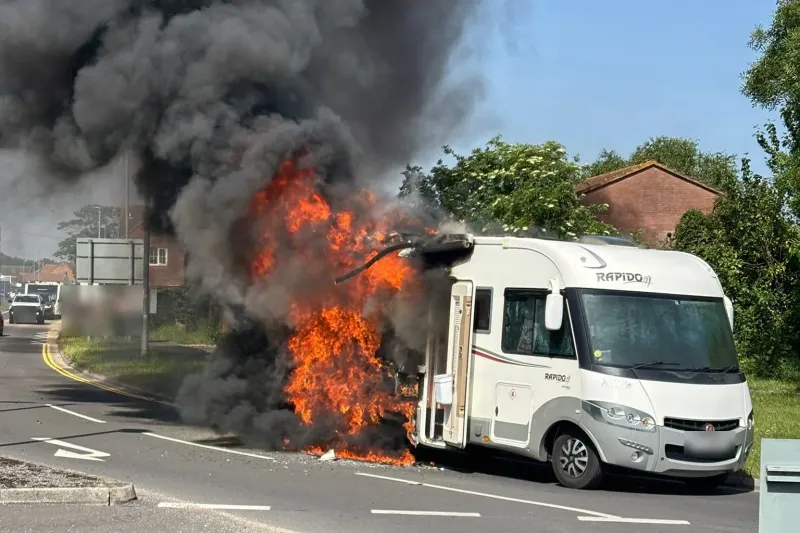
"Most caravan fires start with a perished gas hose, a blocked fridge vent, or tired wiring. All of it is preventable."
Not sure when your gas hoses were last replaced?
Gas Safe registered · fully mobile · comes to you
2. The fridge deserves more attention than it gets
Absorption fridges, including most Dometic units, run a small gas flame to work. That flame needs clean air in and clean exhaust out, and the vents on the outside wall are what make that happen.
Over a winter in storage, those vents attract dust, leaves, cobwebs and the occasional nest. A partially blocked burner or flue means incomplete combustion, and that is exactly how a fridge fire starts — usually behind the unit where you will not see it until there is smoke.
Clear the external vents
Pop the vent covers off and check the burner area and flue are free of debris, cobwebs and any nesting material.
Test on gas before you travel
Run the fridge on gas on the driveway and check the flame is a steady blue rather than yellow and lifting. Yellow or orange means incomplete combustion.
The same principle applies to your water heater and any Alde or Whale heating system on board. Clear vents, clean burner, steady flame.
3. 12V, hookup and batteries
Electrical faults are the other common starting point.
Give your hookup lead a proper look for nicks, crushed sections and scorching around the plug. Always uncoil it fully when it is in use — a coiled cable under load builds heat surprisingly quickly. Check the site bollard rating before running a kettle, a heater and an air fryer at the same time.
Inside, look for chafed or heat-hardened 12V wiring, particularly anywhere it passes through a bulkhead or runs near the fridge or heater. Leisure batteries want checking for swelling, corroded terminals, or a case that looks distorted.
If you carry lithium batteries, e-bike packs, power banks or a portable jump starter, charge them while you are awake and in the van — not overnight and not in a sealed locker. Damaged lithium cells fail fast and burn very hot.
4. Alarms and extinguishers
Simple, cheap, and the thing that buys you the time to get out.
- ! Smoke alarm: Test it and change the battery. A flat smoke alarm battery is the most common fault we find.
- ! Carbon monoxide alarm: Fit and test a CO alarm if you do not have one — it is a separate device, not the same thing as a smoke alarm. CO is odourless and colourless.
- ! Fire extinguisher: Check the date and give it a shake if it is a powder type. Replace if it is past its service date.
- ! Fire blanket: Keep one in the kitchen area, within reach of the hob but not directly above it.
Make sure everyone travelling knows where these are, including the kids.
Everything above is checked on a full habitation service
Gas, appliances, 12V, alarms — one visit, written report
5. On the pitch: the risks outside the van
The van itself is only half of it. In dry conditions, the ground is the problem.
Watch where you park
Exhausts and catalytic converters run hot enough to ignite dry grass and stubble. On tinder-dry pitches, avoid parking over long grass, and do not idle sitting on it.
Respect the barbecue bans
They are in place for a reason and carry fines in some areas. Disposable barbecues stay hot for hours after they look finished and have started more countryside fires than almost anything else.
Keep your spacing
The standard six-metre gap between units exists so that a fire in one van does not take the next three with it. Do not let awnings, windbreaks and gazebos quietly close that gap.
Do not cook under a closed awning
Ventilation matters for both fire and carbon monoxide.
Mind what you leave in a hot van
Aerosols, lighters, disposable vapes and camping gas canisters left on a sunny dashboard or in a locked van in 35-degree heat are a genuine hazard.
Touring Europe this summer?
Southern Europe has had a hard summer of wildfires, and conditions can change quickly. Before you go, check for local fire bans and restrictions in the region you are heading to — they change week to week and are often stricter than anything you will meet at home.
When you arrive somewhere new, take two minutes to work out how you would leave in a hurry and which direction that would take you. Keep the vehicle fuelled, the water tank topped up, and passports, documents and medication somewhere you can grab in one movement.
6. If a fire does start
Get everyone out first. A caravan or motorhome can become untenable in well under a minute, and nothing inside is worth going back for.
Do not try to fight anything beyond a small, contained pan fire. Move away from the van, warn your neighbours, and call 999. If you are somewhere rural and cannot describe the location, what3words will give the fire service a precise position.
In an emergency
Get out, stay out, call 999. Do not re-enter the van to retrieve belongings.